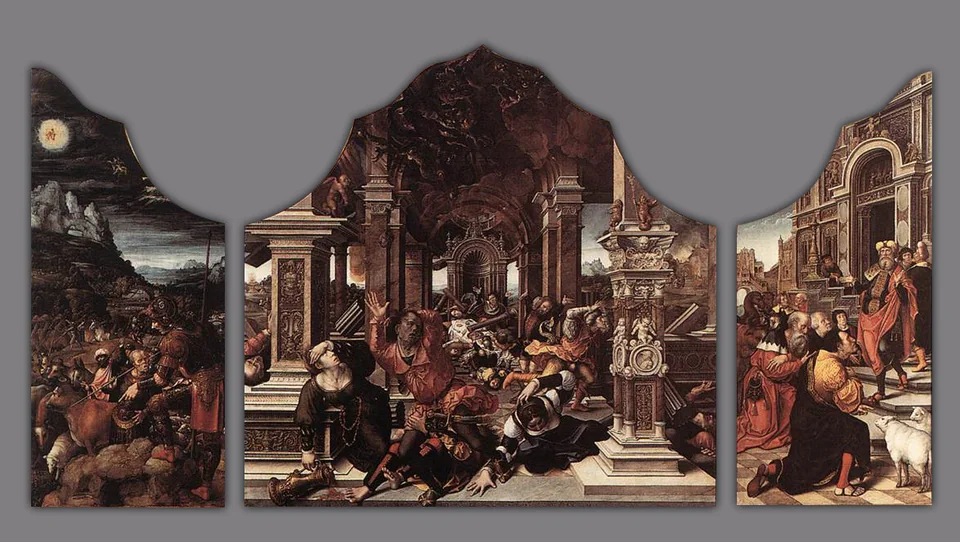
Job · Young's Literal Translation
Job 1: Job Loses Everything
Blameless Job is tested when God lets Satan take his herds, servants and children, yet Job blesses God.
Job
Why do the innocent suffer? Job asks it in a great poem set inside a folk tale. In the prose opening, Job is a rich and upright man in the land of Uz. In a scene in heaven, Satan (in Hebrew, 'the accuser') suggests Job is good only because God has blessed him, and God allows him to be tested. Job loses his children, his wealth and his health, and sits in the ashes, scraping his sores. Three friends come to comfort him and, in long poetic speeches, insist that he must have sinned; Job insists that he has not, and demands an answer from God. At last God speaks out of a whirlwind, not explaining but asking: 'Where wast thou when I laid the foundations of the earth?' In the end Job is restored. It is counted among world literature's masterpieces.
1A man there hath been in the land of Uz — Job his name — and that man hath been perfect and upright — both fearing God, and turning aside from evil. 2And there are borne to him seven sons and three daughters, 3and his substance is seven thousand sheep, and three thousand camels, and five hundred pairs of oxen, and five hundred she-asses, and a service very abundant; and that man is greater than any of the sons of the east.
4And his sons have gone and made a banquet — the house of each [in] his day — and have sent and called to their three sisters to eat and to drink with them; 5and it cometh to pass, when they have gone round the days of the banquet, that Job doth send and sanctify them, and hath risen early in the morning, and caused to ascend burnt-offerings — the number of them all — for Job said, 'Perhaps my sons have sinned, yet blessed God in their heart.' Thus doth Job all the days.
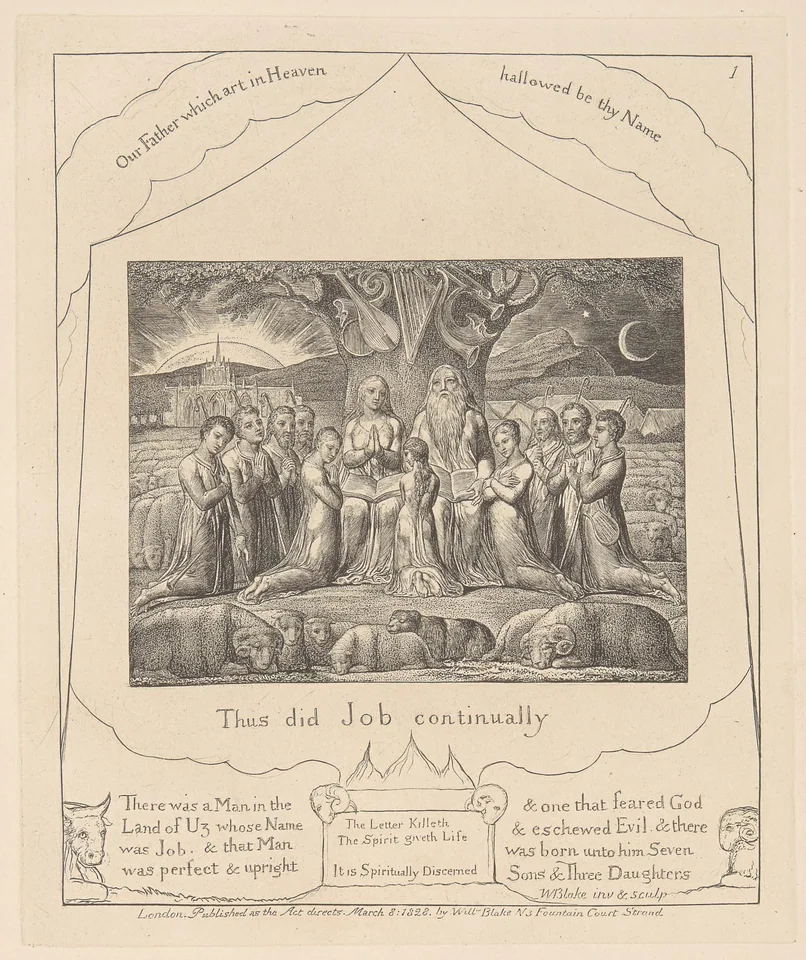
6And the day is, that sons of God come in to station themselves by Jehovah, and there doth come also the Adversary in their midst. 7And Jehovah saith unto the Adversary, 'Whence comest thou?' And the Adversary answereth Jehovah and saith, 'From going to and fro in the land, and from walking up and down on it.'
8And Jehovah saith unto the Adversary, 'Hast thou set thy heart against My servant Job because there is none like him in the land, a man perfect and upright, fearing God, and turning aside from evil?'
9And the Adversary answereth Jehovah and saith, 'For nought is Job fearing God? 10Hast not Thou made a hedge for him, and for his house, and for all that he hath — round about? 11The work of his hands Thou hast blessed, and his substance hath spread in the land, and yet, put forth, I pray Thee, Thy hand, and strike against anything that he hath — if not: to Thy face he doth bless Thee!'
12And Jehovah saith unto the Adversary, 'Lo, all that he hath [is] in thy hand, only unto him put not forth thy hand.' And the Adversary goeth out from the presence of Jehovah.
13And the day is, that his sons and his daughters are eating, and drinking wine, in the house of their brother, the first-born. 14And a messenger hath come in unto Job and saith, 'The oxen have been plowing, and the she-asses feeding by their sides, 15and Sheba doth fall, and take them, and the young men they have smitten by the mouth of the sword, and I am escaped — only I alone — to declare [it] to thee.'
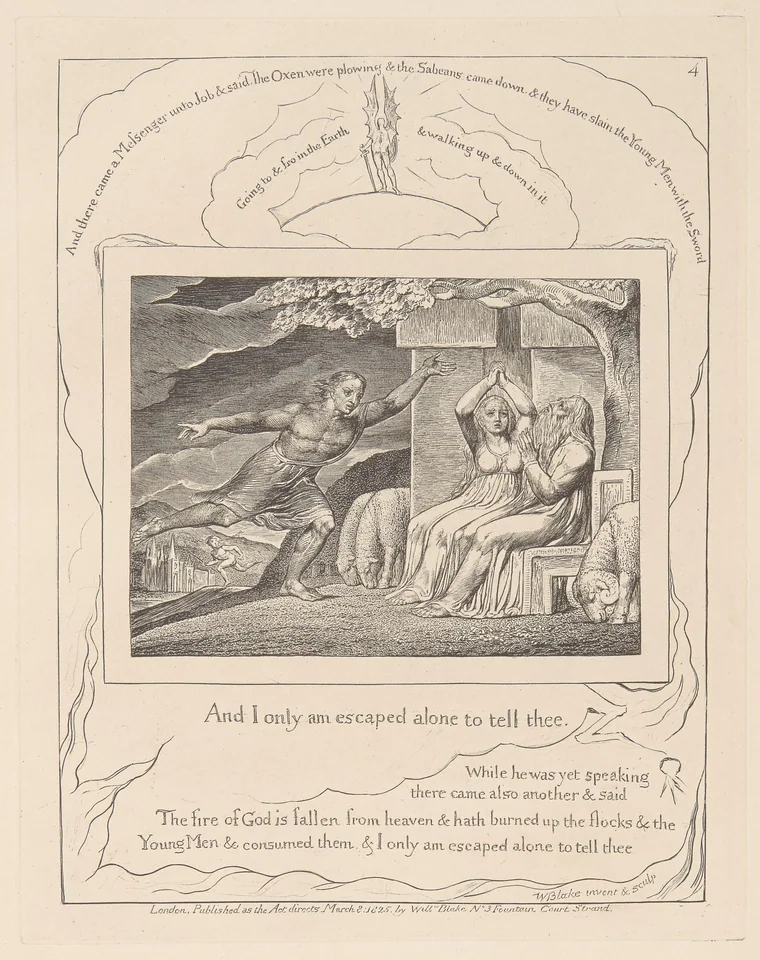
16While this [one] is speaking another also hath come and saith, 'Fire of God hath fallen from the heavens, and burneth among the flock, and among the young men, and consumeth them, and I am escaped — only I alone — to declare [it] to thee.'
17While this [one] is speaking another also hath come and saith, 'Chaldeans made three heads, and rush on the camels, and take them, and the young men they have smitten by the mouth of the sword, and I am escaped — only I alone — to declare [it] to thee.'
18While this [one] is speaking another also hath come and saith, 'Thy sons and thy daughters are eating, and drinking wine, in the house of their brother, the first-born.
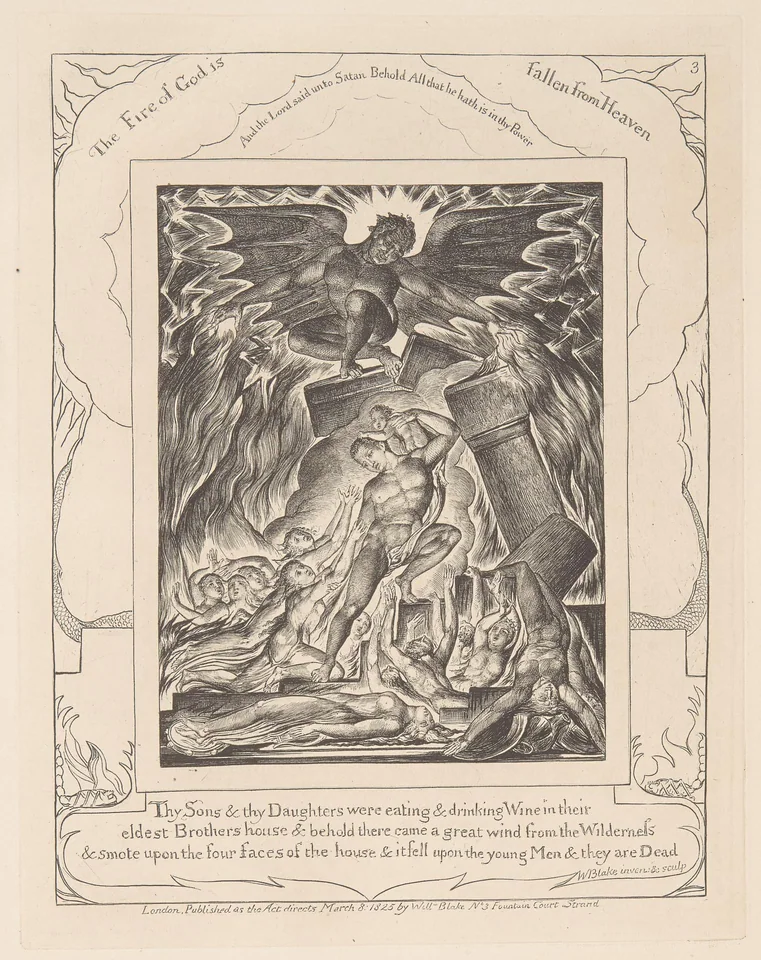
19And lo, a great wind hath come from over the wilderness, and striketh against the four corners of the house, and it falleth on the young men, and they are dead, and I am escaped — only I alone — to declare [it] to thee.'
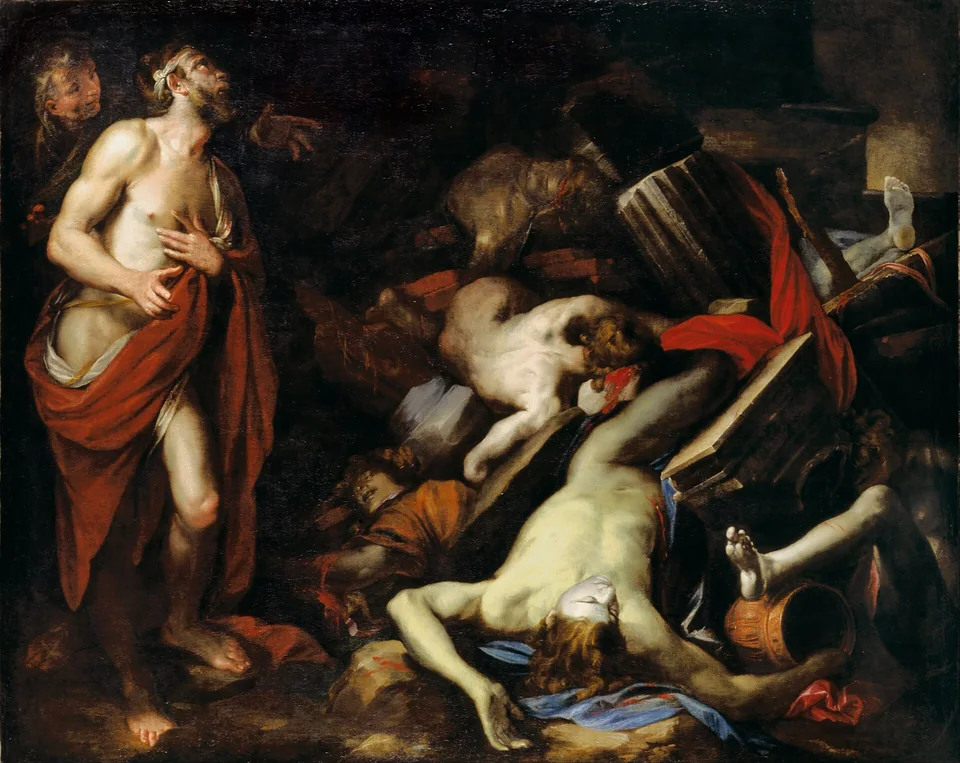
20And Job riseth, and rendeth his robe, and shaveth his head, and falleth to the earth, and doth obeisance, 21and he saith, 'Naked came I forth from the womb of my mother, and naked I turn back thither: Jehovah hath given and Jehovah hath taken: let the name of Jehovah be blessed.' 22In all this Job hath not sinned, nor given folly to God.