Job · Geneva Bible (1599)
Job 4: Eliphaz’s First Speech
Eliphaz answers that the innocent do not perish and describes a night vision of God’s holiness.
1Then Eliphaz the Temanite answered, and sayde, 2If we assay to commune with thee, wilt thou be grieued? but who can withholde himselfe from speaking?
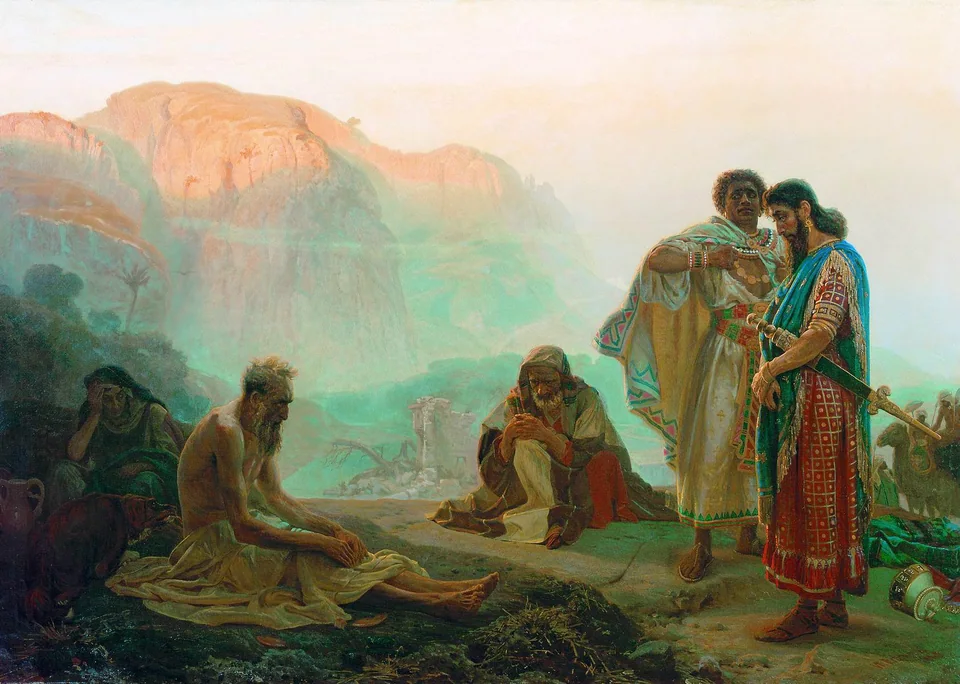
3Behold, thou hast taught many, and hast strengthened the wearie hands. 4Thy wordes haue confirmed him that was falling, and thou hast strengthened the weake knees. 5But now it is come vpon thee, and thou art grieued: it toucheth thee, and thou art troubled. 6Is not this thy feare, thy confidence, thy pacience, and the vprightnesse of thy wayes?
7Remember, I pray thee: who euer perished, being an innocent? or where were the vpright destroyed? 8As I haue seene, they that plow iniquitie, and sowe wickednesse, reape the same. 9With the blast of God they perish, and with the breath of his nostrels are they cosumed. 10The roaring of the Lion, and the voyce of the Lionesse, and the teeth of the Lions whelpes are broken. 11The Lyon perisheth for lacke of pray, and the Lyons whelpes are scattered abroade.
12But a thing was brought to me secretly, and mine eare hath receiued a litle thereof. 13In the thoughtes of ye visions of the night, when sleepe falleth on men, 14Feare came vpon me, and dread which made all my bones to tremble. 15And the wind passed before me, and made the heares of my flesh to stande vp.
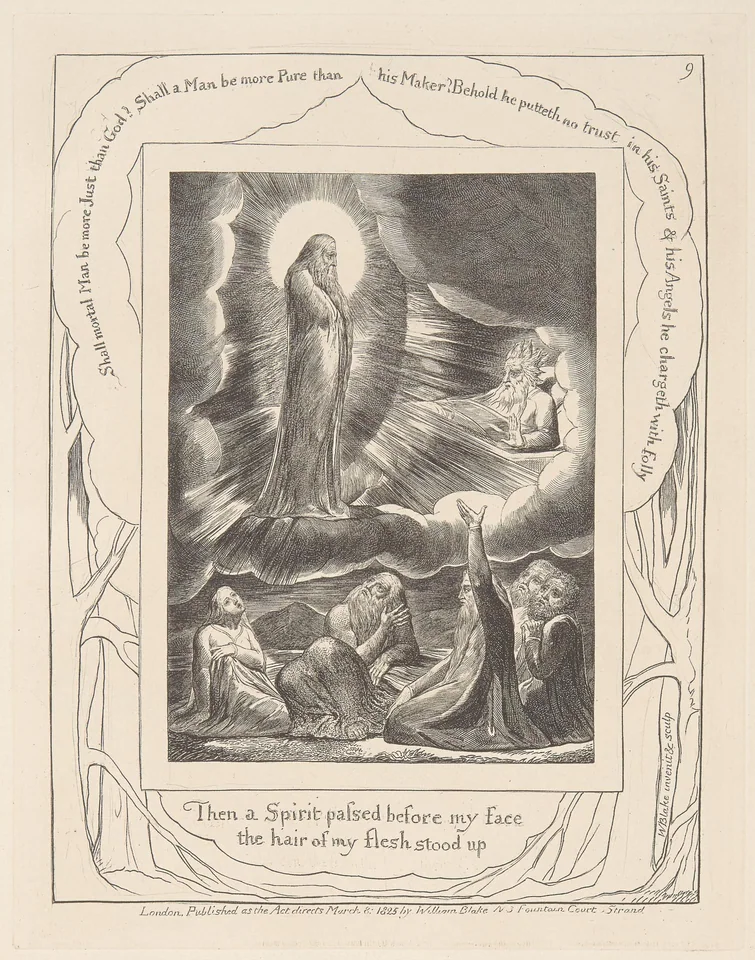
16Then stoode one, and I knewe not his face: an image was before mine eyes, and in silence heard I a voyce, saying, 17Shall man be more iust then God? or shall a man be more pure then his maker? 18Beholde, he founde no stedfastnesse in his Seruants, and laid follie vpon his Angels. 19Howe much more in them that dwell in houses of clay, whose foundation is in the dust, which shalbe destroyed before the moth? 20They be destroyed from the morning vnto the euening: they perish for euer, without regarde. 21Doeth not their dignitie goe away with them? do they not die, and that without wisdom?