Exodus · Revised Version with Apocrypha
Exodus 1: Israel Oppressed in Egypt
The Israelites multiply in Egypt, and a new Pharaoh enslaves them and orders their baby boys killed.
Exodus
In Exodus, the descendants of Jacob, now slaves in Egypt, make their escape. A Hebrew baby named Moses, hidden in a basket among the reeds of the Nile, is raised in Pharaoh's court, and later meets God in a burning bush. Ten plagues strike Egypt, the Passover meal is eaten in haste, and the Red Sea parts. At Mount Sinai God gives the Ten Commandments and makes a covenant with Israel, which the people break almost at once by worshipping a golden calf. The last third gives detailed plans for the tabernacle, the portable tent-shrine where God would dwell among them. It is the second of the five books of Moses.
1Now these are the names of the sons of Israel, which came into Egypt; every man and his household came with Jacob. 2Reuben, Simeon, Levi, and Judah; 3Issachar, Zebulun, and Benjamin; 4Dan and Naphtali, Gad and Asher. 5And all the souls that came out of the loins of Jacob were seventy souls: and Joseph was in Egypt already. 6And Joseph died, and all his brethren, and all that generation.
7And the children of Israel were fruitful, and increased abundantly, and multiplied, and waxed exceeding mighty; and the land was filled with them.
8Now there arose a new king over Egypt, which knew not Joseph. 9And he said unto his people, Behold, the people of the children of Israel are more and mightier than we: 10come, let us deal wisely with them; lest they multiply, and it come to pass, that, when there falleth out any war, they also join themselves unto our enemies, and fight against us, and get them up out of the land.
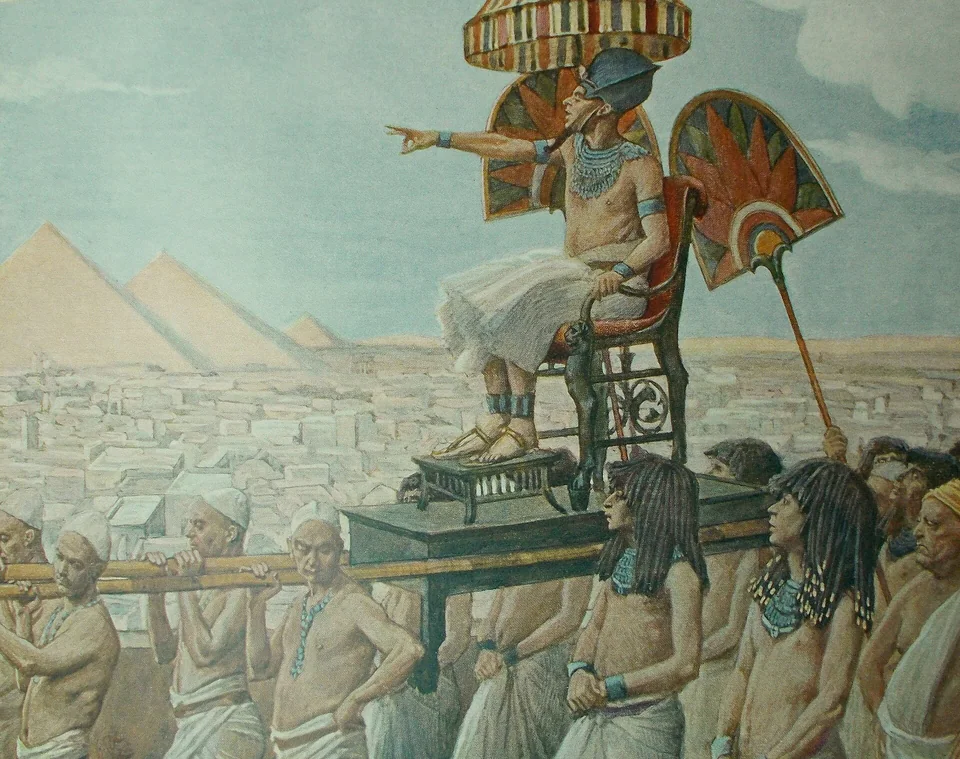
11Therefore they did set over them taskmasters to afflict them with their burdens. And they built for Pharaoh store cities, Pithom and Raamses. 12But the more they afflicted them, the more they multiplied and the more they spread abroad. And they were grieved because of the children of Israel. 13And the Egyptians made the children of Israel to serve with rigour: 14and they made their lives bitter with hard service, in mortar and in brick, and in all manner of service in the field, all their service, wherein they made them serve with rigour.
15And the king of Egypt spake to the Hebrew midwives, of which the name of the one was Shiphrah, and the name of the other Puah: 16and he said, When ye do the office of a midwife to the Hebrew women, and see them upon the birthstool; if it be a son, then ye shall kill him; but if it be a daughter, then she shall live.
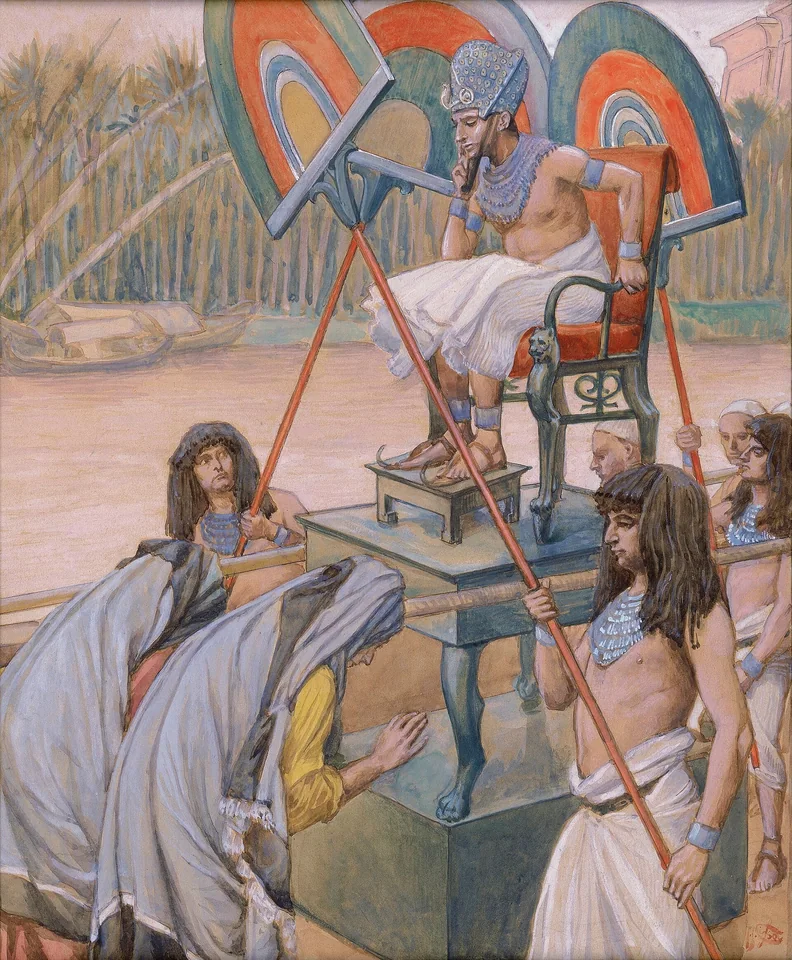
17But the midwives feared God, and did not as the king of Egypt commanded them, but saved the men children alive. 18And the king of Egypt called for the midwives, and said unto them, Why have ye done this thing, and have saved the men children alive?
19And the midwives said unto Pharaoh, Because the Hebrew women are not as the Egyptian women; for they are lively, and are delivered ere the midwife come unto them.
20And God dealt well with the midwives: and the people multiplied, and waxed very mighty. 21And it came to pass, because the midwives feared God, that he made them houses. 22And Pharaoh charged all his people, saying, Every son that is born ye shall cast into the river, and every daughter ye shall save alive.